
Most couples who try Gottman Method exercises at home start the same way. One spouse reads an article or hears about the exercises from a counselor, comes home excited, and tries to get the other on board. Sometimes it works for a week. More often, it quietly fades. Not because the exercises failed, but because daily life didn’t make room for them.
In my years working with couples, I saw this pattern constantly. Someone brings up love maps or turning toward, and the other spouse isn’t quite sure what that means or why it matters. The problem isn’t motivation. It’s that these Gottman Method exercises for couples require a kind of attention that competes with everything else: kids’ schedules, work deadlines, grocery runs, renovation projects. The exercises get squeezed into twenty minutes before bed, and couples rush through what’s supposed to be slow and deep.
Gottman Method techniques genuinely work. The research behind them spans more than four decades and thousands of couples. But they work best when you understand what each exercise is actually doing and why it matters for your marriage, not just how to run through the steps.
What the Gottman Method Is Built On
Dr. John Gottman spent more than 40 years studying what makes marriages succeed or fail. His most well-known contribution is the Sound Relationship House, a model for how strong marriages are built: not through one dramatic gesture, but through layers of small, intentional practices stacked on top of each other over time.
The foundation of that house is knowing your spouse. The walls are built by consistently turning toward each other. The roof is shared meaning, a sense that your marriage is going somewhere together. Each Gottman Method exercise targets a specific part of this house.
Proverbs 24:3-4 says it plainly: “By wisdom a house is built, and through understanding it is established; through knowledge its rooms are filled with rare and beautiful treasures.” That’s remarkably close to what the research confirms. A strong marriage isn’t the product of strong feelings alone. It’s the product of deliberate knowledge, intentional understanding, and daily acts that fill the rooms of your life together.
Here are five Gottman Method techniques you can practice at home, along with what I’ve learned about each one from years of working with couples.
Exercise 1: Love Maps — Knowing Your Spouse Like You Actually Mean It
A love map is Gottman’s term for the mental picture you carry of your spouse’s inner world: their fears, hopes, stressors, dreams, and daily realities. Building Gottman love maps means asking real questions and caring about the answers.
Why Couples Stop Updating
Most husbands and wives build love maps naturally during the early years of marriage. You’re learning each other, asking everything, staying curious. Then somewhere along the way, you stop. Not because you stopped caring, but because you assumed you already knew. The map goes stale, and neither of you realizes it until a conversation reveals how much has changed without either of you noticing.
How to Practice at Home
Set aside 20 to 30 minutes without distractions. Take turns asking open-ended questions: What’s weighing on you right now? What’s something you’re looking forward to this month? What’s one thing I could do that would make this week easier for you?
The point isn’t to cover a checklist. It’s to communicate something specific to your spouse: I don’t assume I know you. I’m still paying attention.
Exercise 2: Turning Toward — The Smallest Moves That Determine Everything
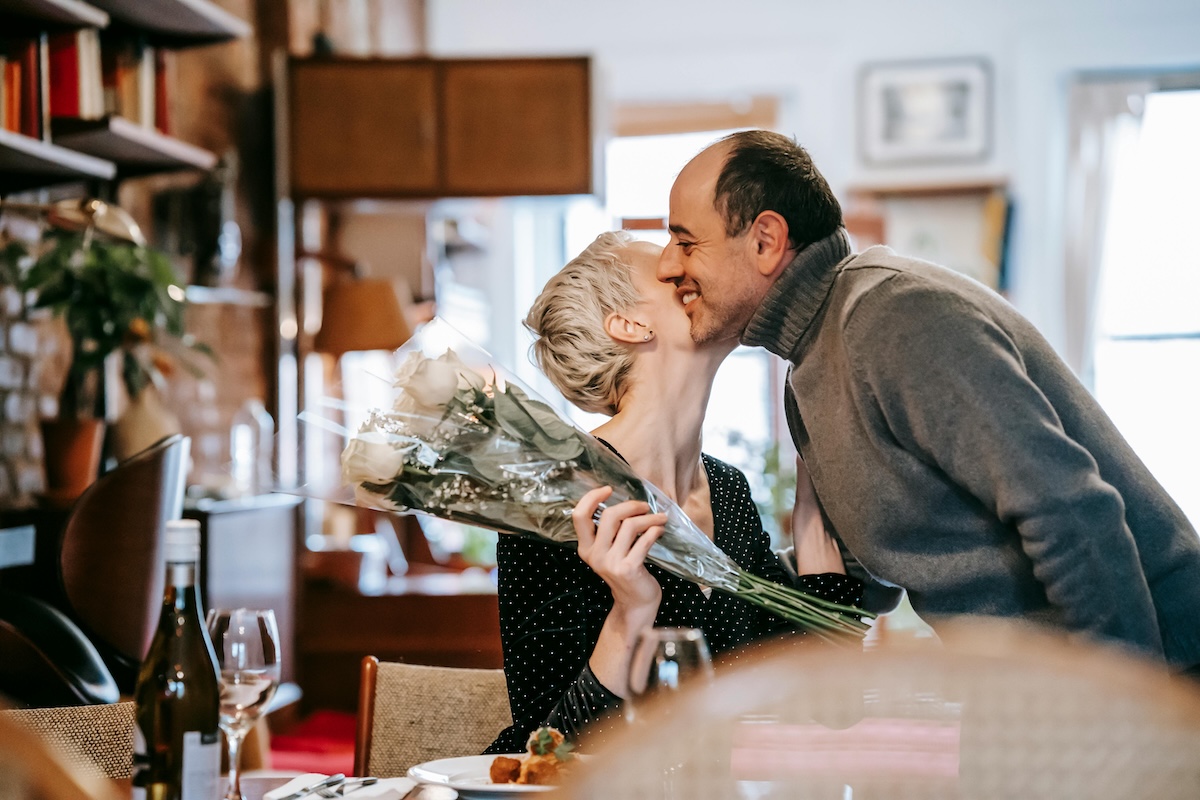
Turning toward is the exercise I spend the most time on with couples, and the one that matters most. It is about how you respond to bids for connection: the small, everyday moments when your spouse reaches out for your attention, affection, or engagement.
A bid can be as small as your wife pointing out something she saw on a walk, or your husband sharing a frustration from work. The question isn’t whether the bid seems important. It’s whether you noticed it and responded.
Why This Matters More Than Conflict Resolution
Gottman’s research found that couples who stayed happily married responded to each other’s bids roughly 86% of the time. Couples who later divorced responded only about 33% of the time. The difference between thriving and failing marriages was not how they handled big arguments. It was what happened in the dozens of small, unremarkable moments every day.
How to Practice at Home
Start by simply noticing bids. For one week, pay attention to the moments your spouse says something, shows you something, or touches your arm. Your only job is to turn toward: make eye contact, put down your phone, respond. That’s it.
On the retreat I lead with my wife Verlynda, we actually demonstrate what turning toward looks like in body language so couples can feel the difference, not just understand the concept. That kind of physical awareness changes something for people. At home, the awareness starts with attention: are you turning toward, turning away, or turning against?
Exercise 3: Fondness and Admiration — Why Gratitude Is a Discipline, Not a Feeling
The Fondness and Admiration System is Gottman’s term for the positive sentiment that couples maintain (or lose) over time. It’s the habit of noticing what’s good about your spouse and saying it out loud.
The Reframe Most Couples Need
Most people think fondness is a feeling that either exists or doesn’t. It’s actually closer to a discipline. You choose to look for what’s admirable. You practice saying it. At first, it feels wooden. You might feel like you’re performing. That’s normal.
One husband described this progression well: “Me putting in the effort to say the phrases showed I was doing my best to learn and grow… once you internalize them, they start to flow through you and it becomes a graceful dance.”
That movement from effort to fluency is exactly how these exercises are meant to work. You don’t wait until gratitude feels natural. You practice it until it becomes natural.
How to Practice at Home
Each day this week, tell your spouse one specific thing you appreciate about them. Not “you’re great” but “I noticed you handled bedtime tonight with so much patience, and I’m grateful.” Specificity is what makes it land.

Exercise 4: The Four Horsemen Antidotes — What to Do Instead
Gottman identified four communication patterns that reliably predict divorce: criticism, contempt, defensiveness, and stonewalling. He calls them the Gottman Four Horsemen. Most articles about the Gottman Method stop at naming them. What matters more is knowing the antidotes, because those are what you can actually practice.
The Antidotes
- Instead of criticism (attacking character), use a gentle startup. Begin with “I feel…” rather than “You always…”
- Instead of contempt (superiority, sarcasm, eye-rolling), build a culture of appreciation. Contempt erodes when fondness is actively practiced, which is why Exercise 3 feeds directly into this one.
- Instead of defensiveness (deflecting blame), take responsibility for even a small part of the problem. “You’re right, I did forget” disarms a conflict faster than any counterargument.
- Instead of stonewalling (shutting down), practice physiological self-soothing. Take a 20-minute break when your heart rate spikes, then return to the conversation.
How to Practice at Home
Pick the horseman that shows up most often in your marriage. Most couples know which one it is. Focus on its antidote for one month. Don’t try to fix all four at once. Replacing one pattern at a time is how lasting change actually works.
Exercise 5: Rituals of Connection — Making the Other Four Stick
The exercises above are powerful, but they tend to fade without structure to hold them. That’s where rituals of connection come in: the small, predictable rhythms you build into your marriage so that connection isn’t something you have to remember to do. It becomes something you simply do.
A ritual can be as simple as a six-second kiss goodbye in the morning. A weekly check-in over coffee on Saturday. A prayer together before bed. What matters isn’t the form. It’s the consistency.
Why This Is Harder at Home Than It Sounds
At home, there’s always something competing for that time. Kids’ soccer practices, a renovation project, the grocery list. Couples intend to build rituals and then life crowds them out. This is one of the reasons a marriage retreat can be so valuable: it strips away the noise long enough for a couple to actually talk about what their rituals should look like, practice them, and build the muscle memory to bring them home.
How to Start
Choose one ritual you can commit to this week. Just one. Make it small enough that it doesn’t require perfect conditions. The goal is to create a pattern your marriage can lean on when everything else gets loud.
These Are Not Five Separate Techniques
They’re five expressions of the same decision: to keep choosing your spouse, deliberately, in the small moments where it’s easiest to coast. The Gottman Method works because it names what strong marriages already do and gives the rest of us a way to practice it on purpose.
If your marriage is in a good place, these tools can make it better. If it’s in a hard season, they give you something concrete to do while you figure out the next step. Either way, they work best when both of you are invested and when you give yourselves the time and space to practice without rushing.
How is the Gottman Method different from other couples therapy approaches?
The Gottman Method is built on more than 40 years of observational research with real couples, not theory alone. It focuses on specific, measurable behaviors like turning toward bids for connection, maintaining a 5:1 ratio of positive to negative interactions, and replacing the Four Horsemen with concrete antidotes. Most other approaches are theory-driven rather than research-driven, which is what makes this method uniquely actionable.
Can couples practice Gottman Method exercises without a therapist?
Yes. Exercises like love maps, fondness and admiration, and rituals of connection can all be practiced at home without professional guidance. That said, working with a trained Gottman therapist or attending a couples retreat can accelerate the process significantly and help couples navigate patterns that are difficult to see from inside the marriage.
How long does it take to see results from Gottman exercises?
Many couples notice a shift within the first two to three weeks of consistent practice. The key word is consistent. Trying an exercise once and moving on rarely changes anything. Building a daily or weekly rhythm is what creates lasting change over months and years.
What is the most important Gottman exercise for couples to start with?
Turning toward, the practice of responding to your spouse’s bids for connection, is the single strongest predictor of long-term marital satisfaction in Gottman’s research. If you only do one exercise, make it this one. It costs nothing, takes no extra time, and changes the daily texture of your marriage.
If you and your spouse want to actually practice these tools together, with a therapist in the room and seven nights of sea days to let the work settle, that is exactly what our Christian Marriage Cruise is built for. Verlynda and I work with a small group of couples over seven nights, using the Gottman Method and Emotionally Focused Therapy in a faith-based environment where you actually have the time and space to go deep. You can find out more and reach out to us here.