
When couples ask me why Verlynda and I put our retreat on a cruise ship instead of booking a hotel conference room closer to home, the short answer is that the sea does something conference hotels cannot. After fifteen years working with couples, and after hosting marriage retreats on land and at sea, I have come to believe the environment is not just a backdrop for the therapeutic work. It is part of the work itself.
Verlynda and I host the Christian Marriage Cruise for couples who are serious about their marriage. People sometimes ask why we went to the trouble of putting a retreat on a ship instead of booking a hotel conference room closer to home. The answer is clinical, not cosmetic. Here is why the sea changes the work.
Why a Marriage Retreat Cruise Works Differently Than Land
Most couples have already tried the usual things. Weekly date nights that get cancelled when the babysitter flakes. Weekend getaways that turn into a debate about which restaurant and whose parents to call on the drive home. Land-based retreats in hotels where the cell signal never quite lets go of you. These all have their place, and none of them are wrong. But they share a problem: the ordinary world is still right there, close enough to touch.
A marriage retreat cruise changes the conditions. The moment you step onto the ship, the logistics of your daily life stop mattering. You are not driving. You are not cooking. You are not deciding where to eat or worrying about whether the kids remembered the dog. That removal of low-grade decision-making is not a luxury add-on. It is the thing that makes the deeper work possible.
The Clinical Reframe: This Isn’t for Couples in Crisis
When I tell people we host a marriage retreat cruise, the most common assumption is that it must be for couples on the verge of splitting up. I understand the reflex. In our culture, the word “retreat” usually means rescue.
But here is what I have seen, both in my practice and on the ships: the couples who benefit most from a marriage retreat are not the couples in acute crisis. They are the couples who have a good marriage and want to keep it that way. They are the ones who notice the drift before it becomes a canyon, and who are willing to invest real time in their marriage while they still have something to build on. We often assume a retreat is the last resort. What the research on relational maintenance actually shows is that the couples who stay strong are the ones who treat their marriage as something worth tending before it starts to crack.
If you and your spouse are in that second group, a marriage retreat cruise is not an emergency room visit. It is more like a really deliberate Sabbath.
Five Reasons the Sea Amplifies the Work
The Disconnection Is a Feature, Not a Bug
One of the quiet enemies of marital intimacy is what I call the mental load, the endless background checklist of groceries, carpools, emails, and home repairs. You cannot focus on your spouse’s inner world when half your brain is tracking whether the laundry got moved to the dryer.
A cruise strips that load off in a way almost nothing else does. From the second you board, the daily grind is simply unavailable. That is not just relaxing. It is neurologically important. Our workshops ask couples to do real work, building what Gottman calls Love Maps and understanding the interaction cycles that keep them stuck. That kind of work needs bandwidth, and bandwidth is exactly what the ordinary week does not give you.
Your Stateroom Becomes a Private Retreat Within a Retreat
Emotional work is tiring. After a morning session where you have been asked to say something vulnerable to your spouse, you need somewhere to go that is not a conference hotel hallway. The privacy of a stateroom gives you that. You can take the tools we hand you in the morning and actually sit with them together in the afternoon, without a ringing phone or a neighbor’s voice through a thin wall.
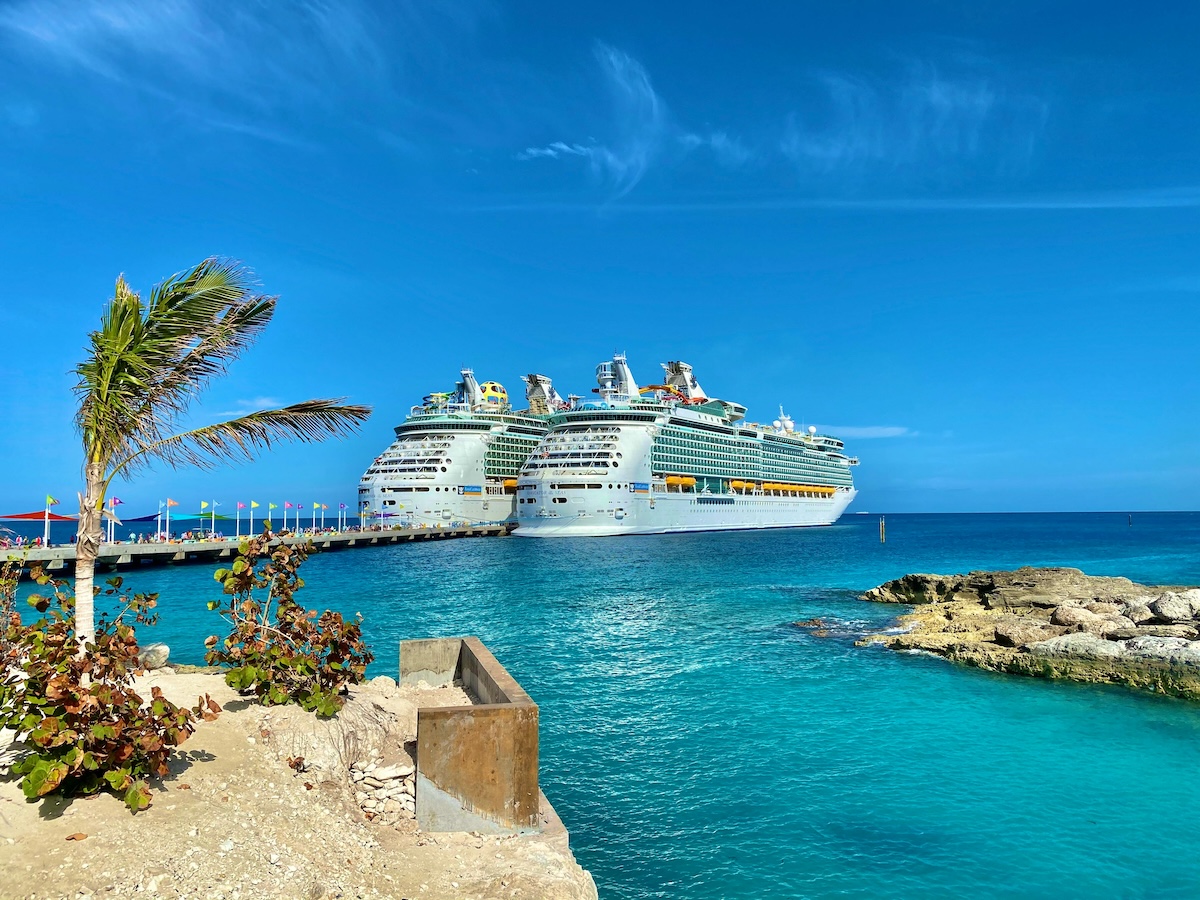
We sail with Celebrity Cruises because their ships give couples that kind of quiet space, which matters more for a marriage retreat than it does for a regular vacation.
Shared Awe Does Something Real in the Brain
The Caribbean and the Alaskan glaciers are not just pretty backdrops. Relationship science is clear that novelty, and particularly novelty experienced together, releases dopamine in a way that mimics the chemistry of early dating. When you and your spouse watch a humpback breach in Icy Strait Point, or walk a cobblestone street in St. Maarten, your brains are doing something closer to the work of falling in love than the work of managing a household.
That is not sentimentality. It is one of the most well-documented findings in the couples research. And it is not something you can reliably manufacture in your own neighborhood.
Small Group Intimacy Inside a Large Ship
Some people hear “cruise” and picture a crowded mega-conference with a thousand strangers. Our format is the opposite of that. The ship carries regular guests, but our retreat group is small and private. Workshops are held in rooms reserved just for our couples. At meals, you can choose to eat with the group you are getting to know, or slip away to a quiet table for two.
You get the safety of a small-group retreat with the freedom of a large, well-appointed ship. That combination is hard to replicate anywhere else.
Meals Become Rituals Again
At home, dinner is usually transactional. Who is cooking, who is cleaning, what is in the fridge, whose turn it is to load the dishwasher. On the ship, none of that exists. Dinner becomes what it was always supposed to be: a conversation across a table, with no clock and no chore waiting afterward. We encourage couples to practice the listening tools from our morning session during those meals. It is remarkable what a slow dinner with no logistics can do for a marriage.
What a Day Looks Like on Our Christian Marriage Retreat Cruise
People often ask what an actual day on the retreat looks like, so here is the honest version. Mornings start slow. Breakfast is on your own, together. Late morning is our workshop session, usually about ninety minutes, focused on one specific skill or framework. Afternoons are yours. Some couples sit with the exercises we gave them, some walk the deck and talk, some nap, some swim. In port days, you explore together. Evenings are a shared dinner with the group if you want it, or a private one if you need it. Once or twice across the week we gather for a short time of worship and reflection together.
The pace is deliberate. We do not pack the days because the work is better when you have room to let it settle.
You can read more about what a marriage retreat at sea actually looks like on our retreat experience page.
A Word About Doing This Together
There is a line in Ecclesiastes that I come back to more than almost any other passage when couples ask whether a retreat is worth the investment. The writer says that two are better than one, because if either of them falls, one will lift up the other, and then he adds that a cord of three strands is not quickly broken (Ecclesiastes 4:9-12). I love that image: not two people straining to hold things together on their own, but three. You, your spouse, and God, braided.
What I see on our retreats, year after year, is couples who arrived still trying to hold their marriage together with two strands. They love each other. They are working at it. But most of the work happens in the margins, between everything else competing for their attention. A week at sea, with God woven into every morning session and every quiet evening on the balcony, changes something about that. Couples leave not just with tools but with a renewed sense of who is actually building this marriage with them.
Is a Marriage Retreat Cruise Worth It?
Is a marriage retreat cruise worth it?
For couples who are willing to use the time well, yes. A marriage retreat cruise gives you something a date night or a weekend getaway cannot: enough uninterrupted time for both of you to actually practice new skills and experience being together without distraction. Couples who come open and invested usually leave with tools they continue to use long after the trip.
What happens on a Christian marriage retreat cruise?
Each day includes one structured workshop session led by a marriage therapist, with the rest of the day left open for rest, exploration, and private processing between spouses. There are also optional group meals and short times of worship throughout the week. Workshops focus on communication, emotional connection, conflict patterns, and practical faith-integrated tools you can bring home.
Is a marriage cruise only for couples in trouble?
No, and in our experience it is usually the opposite. The couples who benefit most are the ones investing in a marriage that is already good and who want to keep it that way. A marriage retreat cruise is better understood as a proactive investment in your marriage, not an emergency intervention.
How is a marriage retreat cruise different from a land-based retreat?
The main difference is environment. A cruise removes decision fatigue almost completely, gives couples a private stateroom for processing the work, and introduces shared novelty through the ports and the ocean itself. Land-based retreats can do good work, but the ordinary world is usually closer than you want it to be when you are trying to reconnect.
Setting Sail Together
If you have read this far, you are probably at least curious about whether a week at sea could actually do something for your marriage. My honest answer is that it can, especially if you come for the right reason. Not because your marriage is falling apart, but because you want to invest in something already worth investing in.
Verlynda and I host a small group of Christian couples each year on either our upcoming Eastern Caribbean marriage cruise or the Alaska glacier cruise retreat. Both cruises run with small groups on purpose, because the work goes better when you are known by name. If you would like to find out more, you can explore our upcoming marriage retreat cruises and reach out to us from there. We would love to hear from you.