
Most couples I talk to do not have a communication problem so much as a margin problem. They love each other. They want to do better. But they are trying to reconnect in the same kitchen where the dishwasher is running, the kids need rides, the phone keeps lighting up, and tomorrow’s to-do list is already pressing in. There is simply no room. A marriage cruise solves a problem most marriage advice never names: it gives a couple a place where the noise stops long enough for the two of them to actually find each other again.
A marriage cruise is a marriage retreat held aboard a cruise ship, where couples spend several days together stepping out of ordinary life to invest in their relationship. The version Verlynda and I host is small and therapist-led: an intentionally limited group, structured teaching on the days at sea, and plenty of unhurried time to put what you learn into practice. It is not a vacation with a marriage seminar bolted on. It is a retreat that happens to take place somewhere beautiful, and the location is doing more work than most couples expect.
This article is for couples who are curious about what a marriage cruise really is, who it serves, and whether the format would actually help them. I want to be honest about both the genuine power of doing this work at sea and the kind of couple it fits best.
What a Marriage Cruise Actually Is
The phrase “marriage cruise” covers two quite different experiences, and it helps to know which one you are looking at.
The first is the large conference at sea. A full ship of two thousand or more guests sails together for a week of stage teaching from well-known speakers, worship sessions, and the energy of a big shared event. These are genuinely good experiences, and for couples who are fed by scale and celebration, they can be a highlight of the year.
The second is the small marriage retreat at sea, which is what we host. Here the group is kept intentionally small. The teaching happens in a room where you can ask a question and actually be heard. The leaders are licensed marriage therapists, not just inspirational speakers, and the tools come out of decades of relationship research. The cruise ship provides the setting and the rest; the retreat provides the depth.
Both formats use the same ocean. What differs is the intimacy and the clinical substance. When I describe what we do, I am describing the second kind: a small-group, therapist-led, faith-based retreat that uses the unique environment of a ship to do something a hotel ballroom cannot.
Why the Sea Changes the Work
The single biggest reason a marriage cruise works has very little to do with the cruise amenities and almost everything to do with what the ocean removes.
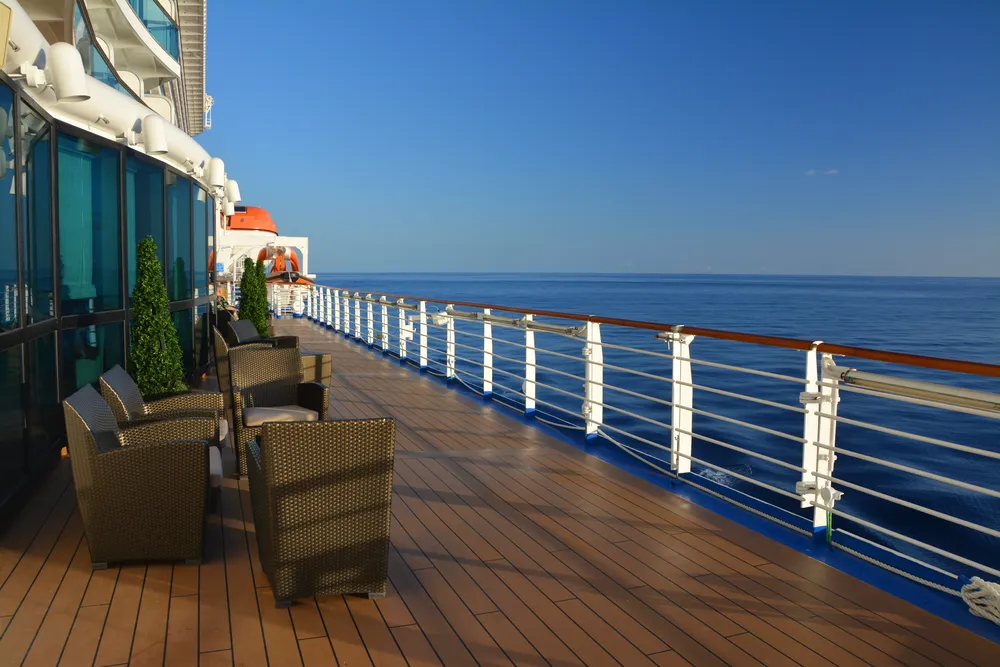
On land, you are never really away. You can be at a weekend retreat forty minutes from home with full cell service, a city humming outside the window, work email one tap away, and the pull of everything you left behind still reaching you. The body knows it. Part of you stays braced. Out on the ocean, that pull weakens. The signal drops. The city is gone. There is nowhere to drive off to and nothing to check. The distractions that normally compete for your attention simply are not there.
What we see, year after year, is that this changes how couples show up. On the sea, our couples consistently find the time to slow down and connect more deeply than they manage in regular life. Not because we are working them harder, but because the environment finally stops working against them. When the noise drops, the conversation that has been waiting underneath it for months gets a chance to surface.
There is a long spiritual precedent for this. When the demands on Jesus and his disciples grew so constant that they did not even have time to eat, his instruction was not to push through. It was to withdraw. “Come with me by yourselves to a quiet place and get some rest” (Mark 6:31). Stepping away from the noise to be restored is not self-indulgent. It is a pattern Jesus himself modeled and prescribed. A marriage cruise is, in a very practical sense, a quiet place you can be carried to, where the ordinary demands cannot follow.
This is the heart of why the format works. You can read every marriage book on the shelf, but if you never get enough margin to practice what they say, nothing changes. The sea creates the margin.
Retreat vs. Conference at Sea: Not the Same Thing
We tend to assume that bigger means better. A larger event, a more famous speaker, a fuller ship. More must mean more value. With marriage work, the opposite is often true.
In a room of a thousand couples, you are an observer. The teaching comes at you from a stage, and however good it is, you receive it the way you receive a sermon or a TED talk. You take notes. You feel inspired. Then you go home and try to remember what to do, usually without much success, because inspiration is not the same as skill.
In a small group led by therapists, you are a participant. You are not just hearing about a tool for repairing conflict; you are trying it, getting coached on it, and watching other real couples work through the same thing. The intimacy is the mechanism. It is what turns a good idea into something your marriage can actually use.
This is not a knock on the large events. If you want celebration, big worship, and the buzz of a crowd, a full-ship conference is excellent at exactly that. But if what you are after is depth, the kind of slow, supported, hands-on work that changes a pattern rather than just naming it, then the small therapist-led retreat is built for a different purpose. Know which one you are signing up for, because they deliver genuinely different things.
What Couples Actually Do on a Marriage Cruise
People often picture a marriage retreat as days of intense, draining emotional work, the relationship equivalent of a tough therapy session that lasts a week. That is not what this is.
A well-designed marriage cruise has a rhythm that breathes. On the days at sea, there are structured teaching sessions, usually in the morning, where we work through real tools. The frameworks come from the research that actually predicts whether marriages thrive, including the work of John Gottman, who has studied thousands of couples over decades, and Emotionally Focused Therapy, developed by Sue Johnson, which helps couples understand the emotional cycle they get stuck in. These are not abstract lectures. You leave each session with something specific to try.
Then the day opens up. In port, you get off the ship together and have an adventure, the kind of shared novelty that researchers consistently find draws couples closer. Evenings are yours. There is dinner, time to talk, time to rest, time to practice what you learned without anyone hovering. The teaching plants the seed; the unhurried hours let it take root.
A typical day might look like this:
- Morning: a teaching and practice session on something concrete, like how to repair after conflict or how to hear what your spouse is really asking for
- Midday and afternoon: time off the ship in port, or rest and recreation on board, just the two of you
- Evening: dinner, conversation, and space to let the day settle
That balance of input and integration is the whole design. You are not being marched through a curriculum. You are being given good tools and then given the room to use them, which is exactly the room ordinary life never provides.
Who a Marriage Cruise Is For (and Who It Isn’t)
I want to be straight about this, because the wrong fit helps no one.
A marriage cruise is for couples who are fundamentally for each other and want to grow. Maybe you are doing fine but you can feel the drift, the slow slide into being efficient roommates who coordinate logistics and rarely really talk. Maybe your marriage is good and you want it to be great. Maybe you are in a solid season and you are wise enough to invest before there is a problem rather than after. This is the couple the retreat serves best: not in crisis, but not willing to coast either.
It is worth saying plainly that this is a proactive investment, not a rescue operation. The most common assumption I hear is that you go to a marriage retreat when things are bad. In reality, the couples who benefit most are often the ones who come while things are still good, because they are not spending the week in damage control. They are building. Strong marriages do not stay strong by accident; they stay strong because someone keeps tending them.
There is one group I would gently point elsewhere first. If your marriage is in acute crisis, a fresh betrayal, or a wound so raw that you cannot yet be in the same room without it boiling over, a group retreat is probably not the right first step. That situation usually calls for focused, private help before a group setting can do any good. The good news is that we have wonderful Christian couples therapists on our counseling team who do exactly this kind of work. You can book a free consultation with them at therapevo.com/christian-marriage-counseling. Get your feet back under you there, and then, when the time is right, a cruise becomes a beautiful way to celebrate the repair of your marriage rather than a place to begin the repair.
For everyone in between, the couples who love each other and simply want more for their marriage than the daily grind allows, the format is hard to beat.
The Real Question Behind the Cost
Couples often frame the decision around price, and that is fair; a cruise is not nothing. But I would gently reframe the question. The real question is not “what does a marriage cruise cost?” It is “what is it worth to invest, seriously and without distraction, in the most important human relationship I have?”
Most of us pour money into things that depreciate and almost nothing into the marriage that shapes the entire quality of our lives. A week of genuine, undistracted attention to your relationship, with good tools and good guidance, is not an expense in the way a new appliance is. It is a deposit into something that pays out for decades. When couples come home, they rarely talk about the ports. They talk about the conversation they finally had.
If you are looking for a way to invest in your marriage this year, not because anything is wrong, but because you know it could be even richer, this might be worth exploring. Verlynda and I host a small-group Christian marriage cruise each year for couples who are serious about growth, and we would love to tell you about it. You can see the upcoming itineraries and reach out to us on our marriage cruises page, or read more about what the retreat experience is actually like.
Frequently Asked Questions
What is a Christian marriage cruise?
A Christian marriage cruise is a marriage retreat held aboard a cruise ship, where Christian couples combine teaching, faith, and time together to strengthen their marriage. The version we host is small and therapist-led, blending relationship research with a scripturally grounded view of marriage as a covenant. The difference from a regular couples vacation is intent: the days are structured to help you actually grow, not just relax.
How much does a marriage cruise cost?
A marriage cruise typically costs more than a weekend land retreat because the price includes your accommodations, meals, and travel to multiple destinations, not just the program. The better way to weigh it is against what you are buying: several days of undistracted, well-guided investment in your marriage. Couples almost always tell us afterward that the conversations they had were worth far more than the fare.
What is the difference between a marriage cruise and a marriage conference?
A marriage conference is usually a large event where hundreds or thousands of couples receive teaching from speakers on a stage. A marriage retreat cruise, at least the kind we run, is small and participatory, with a deliberately limited group, licensed therapist leaders, and hands-on coaching. Conferences are excellent for inspiration and scale; a small retreat is built for depth and actual skill practice. Knowing which you want makes all the difference.
Is a marriage retreat cruise worth it if only one of us is excited about it?
Yes, and that is more common than you would think. Often one spouse is the initiator and the other is quietly skeptical, and the skeptical spouse frequently ends up getting the most out of it. The contained, low-pressure setting tends to lower defenses on its own. You do not both need to arrive enthusiastic; you only need to arrive willing.
Are there Christian marriage cruises in 2027?
Yes. We host a Christian marriage cruise each year, with upcoming 2027 itineraries that include both an Eastern Caribbean route and an Alaska glacier route. Spots are intentionally limited because the group is kept small, so it is worth reaching out early if a particular date or destination matters to you.